BTech Civil Engineering

Civil Engineering

BTech in Civil Engineering

The Civil Engineering Department at Providence College of Engineering focuses on designing, constructing, and maintaining infrastructure such as bridges, roads, and buildings. The programme aims to produce engineers with technical expertise and ethical values to serve society and the nation.

To impart knowledge in Civil Engineering with global perspectives to our students and to make them ethically strong engineers to build our nation

  1. To produce civil engineers of high caliber, technical skills and ethical values to servethe society and nation.
  2. To make the department a center of excellence in the field of civil engineering.
  3. To provide knowledge base and consultancy services to the community in all areas of civil engineering.
  4. To promote innovative and original thinking in the minds of budding engineers to facethe challenges of future.

Graduates will

  • Be exposed to state-of-the-art expertise and will gain sufficient knowledge to identify and resolve complex civil engineering problems using advanced technologies.
  • Achieve a successful career and excel in their chosen civil engineering domain through employment, entrepreneurship, higher studies and/or research.
  • Be sensitive towards social and environmental issues, professional ethics and practices, so that they will develop sustainable civil engineering solutions with a high sense of social responsibility.
  1. Engineering Knowledge: Apply knowledge of mathematics, natural science, computing, engineering fundamentals and an engineering specialisation as specified in WK1 to WK4 respectively to develop to the solution of complex engineering problems.
  2. Problem Analysis: Identify, formulate, review research literature and analyse complex engineering problems reaching substantiated conclusions with considerationfor sustainable development. (WK1 to WK4)
  3. Design/Development of Solutions: Design creative solutions for complex engineering problems and design/develop systems/components/processes to meet identified needs with consideration for the public health and safety, whole-life cost, net zero carbon, culture, society and environment as required. (WK5)
  4. Conduct Investigations of Complex Problems: Conduct investigations of complex engineering problems using research-based knowledge including design of experiments, modelling, analysis & interpretation of data to provide valid conclusions.(WK8).
  5. Engineering Tool Usage: Create, select and apply appropriate techniques, resources and modern engineering & IT tools, including prediction and modelling recognising their limitations to solve complex engineering problems. (WK2 and WK6)
  6. The Engineer and The World: Analyse and evaluate societal and environmental aspects while solving complex engineering problems for its impact on sustainability with reference to economy, health, safety, legal framework, culture and environment.(WK1, WK5, and WK7)
  7. Ethics: Apply ethical principles and commit to professional ethics, human values, diversity and inclusion; adhere to national & international laws. (WK9)
  8. Individual and Collaborative Team Work: Function effectively as an individual, and as a member or leader in diverse/multi-disciplinary teams.
  9. Communication: Communicate effectively and inclusively within the engineering community and society at large, such as being able to comprehend and write effective reports and design documentation, make effective presentations considering cultural, language, and learning differences
  10. Project Management and Finance: Apply knowledge and understanding of engineering management principles and economic decision-making and apply these to one’s own work, as a member and leader in a team, and to manage projects and in multidisciplinary environments.
  11. Life-Long Learning: Recognise the need for, and have the preparation and ability for
    1. Independent and life-long learning
    2. Adaptability to new and emerging technologies, and
    3. Critical thinking in the broadest context of technological change.(WK8)
  1. To be proficient in identification, analysis, design and execution of civil engineeringproblems at optimal cost and within the specified time frame while ensuring quality andsafety.
  2. To inculcate employability skills through technical competence in civil engineering andthrough improved interpersonal skills such as communication and teamwork.
  3. To be cognizant of societal responsibilities and to be able to come up with sustainablecivil engineering solutions while upholding professional ethics.

Civil Engineering is at the heart of modern infrastructure development, contributing to society by designing and constructing essential systems such as transportation networks, water supply systems, and urban structures. This department blends theoretical knowledge with practical applications to ensure students can tackle real-world challenges. With state-of-the-art labs, experienced faculty, and industry partnerships, students are equipped to innovate in sustainable construction, smart cities, and disaster-resistant designs. Whether focusing on geotechnical engineering, structural systems, or environmental conservation, this programme empowers graduates to make lasting contributions to the world around them.

The Civil Engineering curriculum covers foundational topics such as engineering mechanics, materials science, and fluid dynamics, progressing to advanced subjects like structural analysis, geotechnical engineering, transportation systems, and environmental engineering. Practical sessions include hands-on experience with surveying equipment, CAD tools, and modern construction methods. Industry visits, internships, and project-based learning ensure that students are well-prepared for professional practice or further specialisation in areas such as urban planning, sustainable design, and hydrology.

  • Structural Engineer
  • Construction Project Manager
  • Urban Planner
  • Environmental Engineer
  • Transportation Engineer
  • Geotechnical Specialist
  • Research and Development Engineer
  • SONUMON M
    2022
    TCS
    SHERIN K NINAN
    2022
    Byju's
    JITHIN SURESH
    2022
    Byju's
    JELVIN SAM SHAJI
    2019
    Arth Design Build
    RAJALEKSHMI M ACHARI
    2019
    Habitat Technology Group
    HARIKRISHNAN R NAIR
    2019
    Habitat Technology Group
    SREERAM M S
    2019
    Habitat Technology Group
    PARVATHY R
    2019
    Habitat Technology Group
    GOKUL NATH
    2019
    Habitat Technology Group

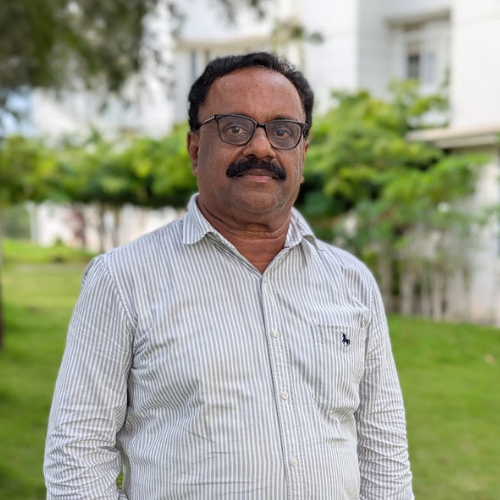
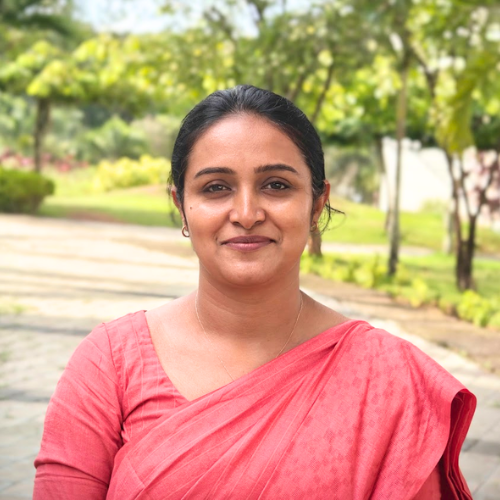
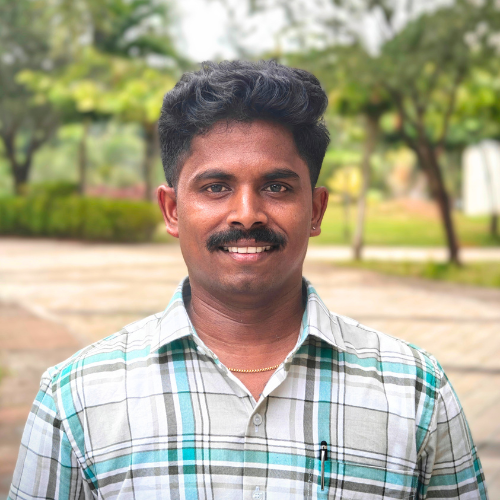
    Meet The Team

    Alex M John
    Professor of Practice
    MTech
    Anjana T
    Assistant Professor
    BTech
    MTech
    Faculty Advisor
    Dr. V John Kurian
    Professor
    BTech
    MTech
    PhD
    Dean (R&D)
    Manjusha Manoj
    Assistant Professor
    BTech
    MTech
    Head of Department
    Nibin Varghese
    Assistant Professor
    BTech
    MTech
    Praveen MV
    Assistant Professor
    BTech
    ME
    NSS Coordinator
    Reenu Rajan
    Assistant Professor
    MTech
    Reshma Rajendran B
    Assistant Professor
    BTech
    MTech
    Sujimol CS
    Technician
    BTech
    Suresh G
    Technician